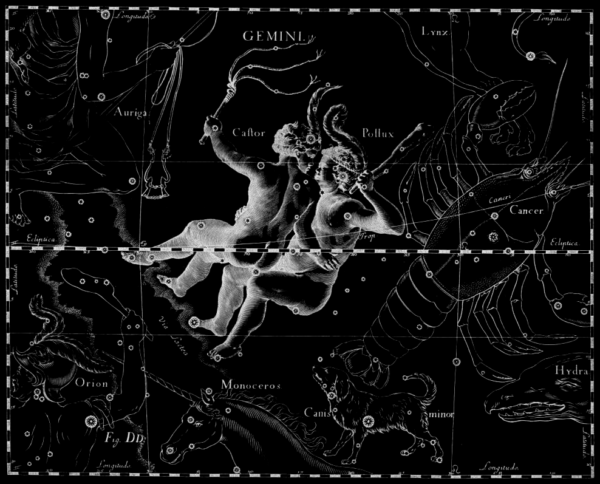
Night Sky Guide March 2013
Night Sky Guide – Tonight’s Sky: March 2013
Your guide to constellations, deep – sky objects, planets and events, Tonight’s Sky, (more…)
Your guide to constellations, deep – sky objects, planets and events, Tonight’s Sky, (more…)

Quadrantid Meteor Shower Credit: nasa.org
The Quadrantid Meteor Shower ushers in 2013 with its peak in the early hours of the 3rd of January.
The Quadrantids can be an impressive meteor shower with rates of up to 120 meteors per hour at its peak (under perfect conditions) and have been known to produce rates of up to 200 meteors per hour. The peak is quite narrow lasting only a few hours, however there will be plenty of meteors to look out for either side of maximum. (more…)

The Geminid meteor shower is the grand finale of astronomical events in 2012 and is the most reliable and prolific of the annual meteor showers.
This year we are in for a special treat as the Moon will be absent when the Geminids are at their peak on the evening of the 12th/ 13th of December. This means that the sky should be at its darkest when the shower is expected and many more of the fainter meteors may be seen. (more…)


A composite image of every meteor captured in a viewing session for the 2011 Orionid Meteor shower at Middle Falls, near Mount Shasta in California. Credit: Brad Goldpaint/Goldpaint Photography. Used by permission Universe Today.
The Earth will soon be traveling through the stream of debris left behind by Halley’s Comet, providing the annual sky show called the Orionid Meteor Shower. This usually reliable meteor shower is expected to peak this coming weekend, October 20-21, 2012, and should produce about 25 meteors per hour, according to the McDonald Observatory at The University of Texas in Austin.
How can you see the show?
By Universe Today
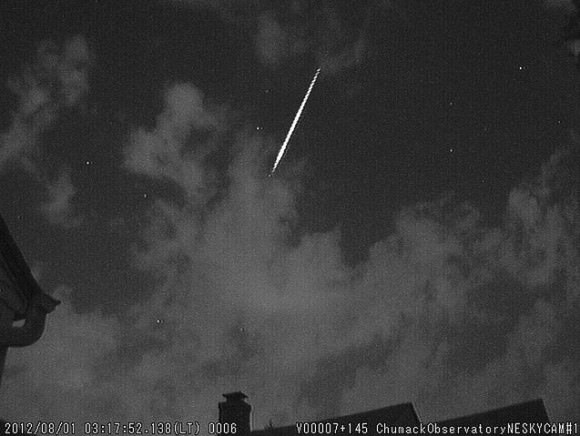
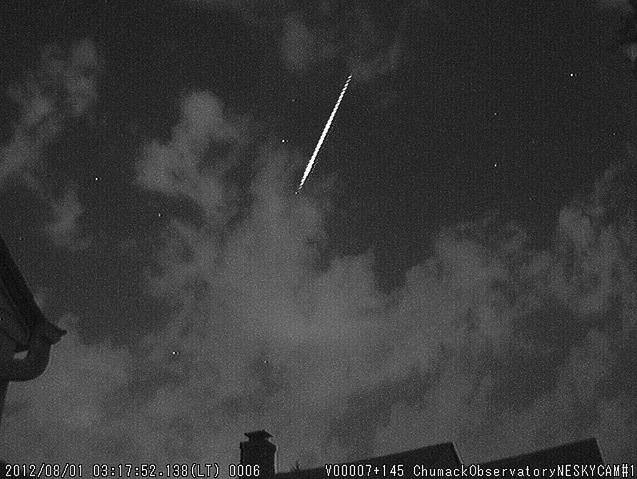
A bright fireball meteor on August 1, 2012. Credit: John Chumack.
Originally posted on Universetoday by Virtualastro
This will probably be the most simple and easiest guide to viewing the Perseids and other meteor showers you may possibly ever read. The reason why it is so simple is when you are outside you want to concentrate on looking for meteors and not worrying about technical details, which are unnecessary for the casual observer.
First, a LITTLE about the Perseids: (more…)

Long Exposure photo of a visible ISS pass Credit: Mark Humpage
It’s meteorwatch and as well as shooting stars from the Perseid meteor shower, we can see some excellent International Space Station (ISS) passes alongside the celestial fireworks. (more…)


