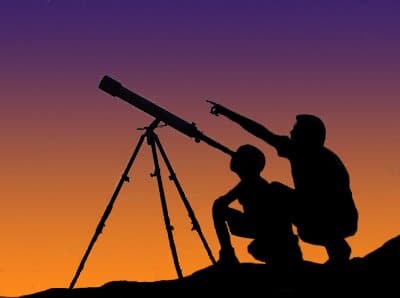
Discover the wonders of our dark skies with Dr Marek Kukula, Public Astronomer at the Royal Observatory, Greenwich. (Special Guest appearance by meteorwatch.org)
Meteors streaking across the sky are an amazing sight. Every time I see a meteor is a thrilling moment.
I’m not a professional astronomer or even a specialized expert. I’ve just been watching the skies for meteors and showing others how to spot them for a long time. I particularly enjoy helping people who have never seen a meteor before experience their first sighting. My greatest success is watching the Perseid Meteor shower together with my kids while we were camping in the mountains together. It is an emotional memory that we’ll share all our lives.
Watching meteors is special because it truly takes no special equipment whatsoever. Telescopes or cameras just restrict your field of view – for best viewing simply lie back and enjoy the sky in front of your own eyes.
Meteorwatch itself is special for a lot of reasons. It is a world-wide event of professional and amateur astronomers getting together to share the heaven’s most showy display of the year. It’s an opportunity to collect real data that may be useful for astronomers to work with to increase our understanding of space. For me, meteorwatch is a chance to share my excitement with others who have never seen the beauty of a meteor flashing overhead.
Our goal for meteorwatch is to increase the odds for everyone to find meteors. Meteorwatch occurs August 12 through August 14 to correspond with the Perseid Meteor shower. The Perseids are a predictable shower that comes every year. In fact, meteors from the Perseids have been observed for about 2000 years already! The meteors are frequent and fairly bright, so it’s likely that you’ll be able to spot one if you go out prepared.
The first step of being prepared is that you need to find the darkest place you can find, as far away as possible from lights that will disrupt your night vision. If the moon is out while you’re observing, try to block it as best as you can with trees or a hill so you don’t look at it and ruin your night vision. If your night vision does get disrupted, you will not be able to see the dimmer meteors at all, so keep your eyes up and don’t pull out your phone to tweet every few minutes.
It’s true that Perseid meteors will likely come at between one and two meteors every minute, but you won’t be able to see that many because most of them are dim and washed out by city lights. The darker it is, the more meteors you will see! When I’m in a reasonably dark area near the outskirts of my city I’m happy to see one meteor every five minutes or so. If you can’t get out of the city, you may have to wait longer because you will only see the brightest meteors. There are plenty of sightings from the heart of cities, so it’s not impossible, just more difficult. It’s certainly worth an attempt if you can find a park without lights or some other dark area near you.
The second step is to make sure that you’re comfortable while waiting. A good chair that supports your neck while you look up is helpful. Even though the Perseids occur during summer, the nights can get quite chilly so dress warmly and bring something warm to drink.
The third step is to keep it an enjoyable outing. Some people like to go out alone and listen to music while waiting. That’s great too, but I usually tell first-timers to go out in groups. I especially encourage people to take their kids out. Young eyes may see phantom meteors at first, but once they get the hang of it they’ll spot meteors too dim for you or I to spot any more. Kids are fantastic at spotting meteors and it encourages them to be interested in the world around them. Besides, who wouldn’t appreciate a late night out once in a while?
The most frequent question I get asked year after year has been, “Where should I look in the sky to see the meteors?” In the past I’ve tried to describe how to find the constellation Perseus, but it’s rather unnecessary. Accustom your eyes to the dark, and after you’ve seen three or four meteors you should be able to figure out where Perseus is in the sky all on your own! It’s most important to look up, be relaxed and patient, and the meteors will dazzle in front of you as long as you are willing to watch.
Unfortunately, we don’t all get clear skies. Some of us are clouded out and have no chance at spotting meteors above us, but that doesn’t mean you’re out of luck. Follow the #meteorwatch hashtag on twitter for tips, pictures, radio observing and to share your experiences with other enthusiasts around the world. Go to www.meteorwatch.org for news and information and be sure to follow twitter.com/VirtualAstro for fantastic coverage of the Perseid Meteor shower direct from his Astrobunker.
Mark Zaugg is an amateur astronomer and enthusiast who particularly enjoys introducing people to the excitement of seeing a meteor in person. You can find him at twitter.com/Zarquil
Out there somewhere in our solar system is a 26 kilometre wide comet, a chunk of dirty ice on a 130 year orbit of the Sun. This giant cosmic snowball was thought to have been born in the Oort Cloud, a vast spherical region of icy objects nearly 6 trillion miles from the Sun, almost a light year. With a total mass of roughly 40 times that of Earth, the Oort Cloud is so far out that the Sun’s gravity is weak but the gravity of nearby stars can have an effect, nudging these remote icy chunks out of position and sending them on a long journey towards the inner solar system. One of these mysterious icy travellers is called Comet Swift-Tuttle, much larger than the object thought to have spoiled the party for the dinosaurs, and the largest known chunk of space stuff to make repeated passes near the Earth. Although you can breath a sigh of relief, as it poses no degree of threat for at least a few thousand years, so we get to see its associated meteor shower without that bothersome mass extinction. Comet Swift-Tuttle, which last made its closest approach to Earth in 1992, is the particular comet in question that we’re interested in for August as it produces the Perseid meteor shower.
As this comet makes its way around the solar system it leaves a trail of dusty material in its wake. Every August as the Earth passes through this debris stream we get to see probably the most reliable and best meteor showers of the year. The fine grains zip through the atmosphere at 130,000 miles per hour, at a rate of up to 90 to 100 an hour. As with anything in astronomy it’s always best to view a meteor shower from a darker location, and hopefully with the bright Moon out of the way.
OK, so here’s where your view of the August 2011 Perseids may be taken down a slight notch as compared to other years. The Moon normally gives cracking views in your binoculars or telescope, but our old friend Lunar is nobody’s friend when it comes to meteor showers as its light can wash out all but the brighter of those spectacular shooting stars. This year we have a full Moon unfortunately on the two nights of the shower’s peak. This peak time is during the pre dawn hours of Friday the 12th and Saturday the 13th of August…so that’ll be the 11th beyond midnight, and the 12th beyond midnight. You have more chance of seeing meteors in the small hours as Earth faces into the shower during this time, resulting in the chance of seeing more and faster meteors. The Perseid meteor shower actually starts from the end of July and goes up until late August, but peaks on the mornings of the 12th and 13th of August. So keep your eyes peeled for Perseids in the weeks either side of the peak too. You’ll see the the Perseids seeming to radiate from, you’ve guessed it…the constellation Perseus. Although you can actually catch them streaking across any part of the sky, they’ll just seem to be coming from the direction of that constellation. Look to the north-east after dark and you’ll see Perseus rising, it then moves higher to the east before dawn. Even though the Moon will be in the sky during the peak, don’t let that dissuade you as it’s still well worth getting outside…don’t miss it.
The great thing about meteor showers is that the only equipment needed is your eyeballs, so everyone can join in. Get some friends and make a night of it, and the best thing about the Perseids is they conveniently come at the best time of the year when it’s nice and warm (hopefully). Meteor watching requires a lot of patience, but if you sit back, relax and put some time in you should be rewarded. There’s actually another night sky attraction to admire while you’re waiting for shooting stars, and that’s the solar system’s heavyweight Jupiter. The gas giant starts rising from the east shortly before midnight on the dates of the meteor shower peak. Check it out naked eye, but if you happen to have some binoculars with you grab a quick peek at the stormy planet blazing brightly at magnitude -2.36, and get a look at those moons. Don’t get too distracted though as you’ll want to keep an eye out for Comet Swift- Tuttle’s fireworks.
Don’t forget to get involved with Meteorwatch on Twitter…tweet your location and how many meteors you observe, and see your results on the Meteormap. Good luck !
Between the 11th & 13th August the perseid meteor shower will once again be visible. This will peak on Friday night when you can expect to see many metors burn up in the upper atmosphere. Its an impressive sight, and one that you can not only see, but capture on your camera, in fact you can get some great shots with only an iPhone!
You’ll need an iPhone 3G along with the Slow Shutter Cam app from Cogitap Software, its 69p and well worth it. This allows the shutter to remain open for a longer period of time, and hopefully catching a meteor. Just open App Store on your phone and download! (I’m sure that there are similar apps for Android phones too)
To take full advantage of this app I would recommend getting your iPhone set up on a tripod. I have been using an adapted generic (cheap) car windscreen mobile phone holder. I sourced the correct sized nut and glued it to the holder. I can then attach it to any tripod, although normally use a jobby gorilla grip on it.
These elements are all you need to use your iPhone to shoot great shots!
The settings I have been using to catch the ISS are
Capture Mode = Light Trail
Shutter speed = B (Bulb)
This should work for the meteors..
I would also recommend you enable the Screen Shutter function that allows you to tap anywhere on the screen to take a shot..
A full Moon is set to disrupt the spectacular Perseids meteor shower when the annual display peaks on the 12 and 13 August.
The full Moon introduces natural light pollution that can be as bad the man-made glare in a city center and for the best views, star gazers are advised to escape the city lights and head out to the big open and dark skies of the countryside where the stars and meteors will be at their brightest.
Credit: Graham Bowes
The National Trust has produced a handy online guide to star gazing and listed some of its best ‘dark skies’ locations to catch a glimpse of this special and natural light show.
Dr Marek Kukula, Public Astronomer at the Royal Observatory Greenwich, said: “The Perseids are always an exciting meteor shower to watch out for. Even in large cities it’s often possible to catch site of some of the brighter Perseid meteors streaking across the sky, but from a really dark site you can sometimes see dozens per hour.
“But despite this year’s Perseid shower coinciding with the full Moon it’s still well worth going out for a look. The meteors can appear anywhere in the sky so try looking away from the bright Moon to maximise your chances of seeing one.
It always amazes me to think that what you’re seeing are tiny specks of dust from the tail of Comet Swift-Tuttle burning up high in our atmosphere. The comet left the dust behind hundreds of years ago and every August the Earth ploughs through it as it moves around the Sun. So each meteor is a little piece of evidence of the Earth’s motion through space.”
Some of the locations highlighted in the National Trust guide include the dramatic landscape around the world famous Stonehenge in Wiltshire and Mam Tor in the Peak District, high above Sheffield and only a short distance from the city of steel.
Philip Broadbent, National Trust Outdoors Programme Manager, said: “Its worth spending the time to find the perfect spot to gaze up at the stars; as once you’re there looking into the night sky it will take your breath away.
“And the best thing is that it won’t cost you a penny and this star time will always stay with you as one of those experiences that money can’t buy.”
This year the National Trust will be working with the team at meterowatch.org (twitter.com/virtualastro)to track the meteors from the Perseid shower as they appear. Tweeting the hashtag #meteorwatch on twitter, with the first part of a postcode and how many meteors seen will build an interactive map of the UK. As well as the map, meteorwatch.org is where you can find all the tips you need for observing the Perseids and lots more info.
August isn’t the only time for star gazing; its great all year round and the Trust website offers a basic introduction to astronomy, including monthly constellation guides, useful facts about the universe and where to find local astronomy groups and events.
More information can be found at http://www.nationaltrust.org.uk/darkskies or www.meteorwatch.org.
-ends-
For further information please contact Steve Field, Acting Press Officer, on 01793 817740, 07767 006167 or [email protected].
Black Down in Sussex – Get closer to the stars on the highest point in the South Downs, just over a mile from the town of Haslemere.
Teign Valley in Devon – Discover the stars at this Trust property within Dartmoor National Park and close to Castle Drogo.
Penbryn Beach in Wales – Beautiful, unspoilt mile-long beach on the Ceredigion coast in west Wales, great for a bit of star gazing and a late night paddle.
Stonehenge Landscape in Wiltshire – Step back in time and discover the ancient skies of Salisbury Plain’s chalk downlands, home to the impressive prehistoric stone monument.
Wicken Fen National Nature Reserve in Cambridgeshire – Close to historic Ely, the wild landscape of the National Trust’s oldest nature reserve offers dark skies and a wealth of nocturnal wildlife to listen out for.
Mam Tor in Derbyshire – Escape the bright city lights of Sheffield and experience the peace and tranquillity of Mam Tor’s dark skies in the Peak District.
Friar’s Crag in Cumbria – Surrounded by the breathtakingly beautiful scenery of the Lake District, Friar’s Crag in Keswick juts out into the spectacular lake of Derwentwater; a restful place to contemplate the world above us.
More information about all of these sites is available by visiting: http://www.nationaltrust.org.uk/darkskies
Other great sites include: Flatford and the Dedham Vale on the Essex/Suffolk border, Leith Hill in Surrey, Clent Hills in Worcestershire, Buckstones in Yorkshire, Golden Cap in West Dorset, Slindon on the south Downs, South Milton Sands in south Devon, Winchelsea in East Sussex, Goldolphin Hill and Rinsey Cliff in West Cornwall, the Quantocks in Somerset, Divis Mountain above Belfast, Knole Park in Kent and Trelissick in Cornwall.
Dr Marek Kukula is the Public Astronomer at the Royal Observatory Greenwich, which is part of the National Maritime Museum. He has 15 years’ experience of astronomy research, specialising in the study of distant galaxies and supermassive black holes. Designed by Christopher Wren, the Royal Observatory, Greenwich is home of Greenwich Mean Time and the Prime Meridian and one of the most important historic scientific sites in the world. Today the galleries describe the achievements of the early astronomers, explain the history of the search for longitude at sea and tell the story of precision timekeeping, as well exploring modern astronomy. The Royal Observatory also is home to the state-of-the-art Peter Harrison Planetarium (PHP), London’s only public planetarium which has a regularly updated programme of shows.
The National Trust is Europe’s biggest conservation organisation and looks after special places across England, Wales and Northern Ireland for ever, for everyone. People and places are at the heart of everything it does. Over 3.8 million members and 61,000 volunteers help the Trust look after 300 historic houses and gardens, 1,100 kilometres of coastline and 250,000 hectares of open countryside. Find out more at: http://www.nationaltrust.org.uk/