by VirtualAstro | Sep 27, 2011
NASA’s decommissioned Upper Atmosphere Research Satellite fell back to Earth at 12:01 a.m. EDT (0401 GMT) on Saturday, Sept. 24. The Joint Space Operations Center at Vandenberg Air Force Base in California has determined the satellite entered the atmosphere over the Pacific Ocean at 14.1 degrees south latitude and 189.8 degrees east longitude. This location is over a broad, remote ocean area in the Southern Hemisphere, far from any major land mass. The debris field is located between 300 miles and 800 miles downrange, or generally northeast of the re-entry point. NASA is not aware of any possible debris sightings from this geographic area.
This is your source for official information on the re-entry of UARS. All information posted here has been verified with a government or law enforcement agency. This is NASA’s final status report on the re-entry of UARS.
This map shows the ground track for UARS beginning off the coast of Africa at 0330 GMT and ending at atmospheric interface over the Pacific at 0401 GMT.
Six years after the end of its productive scientific life, UARS broke into pieces during re-entry, and most of it up burned in the atmosphere. Twenty-six satellite components, weighing a total of about 1,200 pounds, could have survived the fiery re-entry and reach the surface of Earth.
The Operations Center for JFCC-Space, the Joint Functional Component Command at Vandenberg Air Force Base, Calif., which works around the clock detecting, identifying and tracking all man-made objects in Earth orbit, tracked the movements of UARS through the satellite’s final orbits and provided confirmation of re-entry.
“We extend our appreciation to the Joint Space Operations Center for monitoring UARS not only this past week but also throughout its entire 20 years on orbit,” said Nick Johnson, NASA’s chief scientist for orbital debris, at NASA’s Johnson Space Center in Houston. “This was not an easy re-entry to predict because of the natural forces acting on the satellite as its orbit decayed. Space-faring nations around the world also were monitoring the satellite’s descent in the last two hours and all the predictions were well within the range estimated by JSpOC.”
UARS was launched Sept. 12, 1991, aboard space shuttle mission STS-48 and deployed on Sept. 15, 1991. It was the first multi-instrumented satellite to observe numerous chemical components of the atmosphere for better understanding of photochemistry. UARS data marked the beginning of many long-term records for key chemicals in the atmosphere. The satellite also provided key data on the amount of light that comes from the sun at ultraviolet and visible wavelengths. UARS ceased its scientific life in 2005.
Additional resources:
› NASA News Release, Sept. 24, 2011
› Re-Entry and Risk Assessment (498 KB PDF)
› Frequently Asked Questions: Orbital Debris
If you find something you think may be a piece of UARS, do not touch it. Contact a local law enforcement official for assistance.
Credit: NASA

by VirtualAstro | Sep 26, 2011
AURORA UPDATE! New Auroral oval predictions for the UK and North America! We are definitely going to see Aurora tonight
Europe Aurora Oval Prediction Credit: alaska.edu
A strong-to-severe geomagnetic storm is in progress following the impact of a coronal mass ejection (CME) at approximately 12:15 UT on Sept. 26th. The Goddard Space Weather Lab reports a “strong compression of Earth’s magnetosphere. Simulations indicate that solar wind plasma [has penetrated] close to geosynchronous orbit starting at 13:00UT.” Geosynchronous satellites could therefore be directly exposed to solar wind plasma and magnetic fields. High-latitude sky watchers should be alert for aurors after nightfall. (Credit: Spaceweather.com)
The best time to try and spot Aurora (The Northern lights) is around midnight, but this could be soon er or later.
You don’t need a telescope or binoculars to see the show (if it happens from your location) just your eyes.
Find a dark spot away from street lights and other light sources and look North. You should see Aurora very close to the horizon or higher, depending on your location, current conditions and intensity of the geomagnetic storm.
Good luck.

Predicted Auroras Over North America Credit: alaska.edu

by VirtualAstro | Sep 25, 2011
UARS Ground Track Credit:NASA
NASA News Release : 11-350
NASA’s UARS Re-Enters Earth’s Atmosphere
WASHINGTON – NASA’s decommissioned Upper Atmosphere Research Satellite (UARS) fell back to Earth between 11:23 p.m. EDT Friday, Sept. 23 and 1:09 a.m. Sept. 24, 20 years and nine days after its launch on a 14-year mission that produced some of the first long-term records of chemicals in the atmosphere.
The precise re-entry time and location of debris impacts have not been determined. During the re-entry period, the satellite passed from the east coast of Africa over the Indian Ocean, then the Pacific Ocean, then across northern Canada, then across the northern Atlantic Ocean, to a point over West Africa. The vast majority of the orbital transit was over water, with some flight over northern Canada and West Africa.
Six years after the end of its productive scientific life, UARS broke into pieces during re-entry, and most of it up burned in the atmosphere. Data indicates the satellite likely broke apart and landed in the Pacific Ocean far off the U.S. coast. Twenty-six satellite components, weighing a total of about 1,200 pounds, could have survived the fiery re-entry and reach the surface of Earth. However, NASA is not aware of any reports of injury or property damage.
The Operations Center for JFCC-Space, the Joint Functional Component Command at Vandenberg Air Force Base, Calif., which works around the clock detecting, identifying and tracking all man-made objects in Earth orbit, tracked the movements of UARS through the satellite’s final orbits and provided confirmation of re-entry.
“We extend our appreciation to the Joint Space Operations Center for monitoring UARS not only this past week but also throughout its entire 20 years on orbit,” said Nick Johnson, NASA’s chief scientist for orbital debris, at NASA’s Johnson Space Center in Houston. “This was not an easy re-entry to predict because of the natural forces acting on the satellite as its orbit decayed. Space-faring nations around the world also were monitoring the satellite’s descent in the last two hours and all the predictions were well within the range estimated by JSpOC.”
UARS was launched Sept. 12, 1991, aboard space shuttle mission STS-48 and deployed on Sept. 15, 1991. It was the first multi-instrumented satellite to observe numerous chemical components of the atmosphere for better understanding of photochemistry. UARS data marked the beginning of many long-term records for key chemicals in the atmosphere. The satellite also provided key data on the amount of light that comes from the sun at ultraviolet and visible wavelengths. UARS ceased its scientific life in 2005.
Because of the satellite’s orbit, any surviving components of UARS should have landed within a zone between 57 degrees north latitude and 57 degrees south latitude. It is impossible to pinpoint just where in that zone the debris landed, but NASA estimates the debris footprint to be about 500 miles long.
For more information about UARS, visit:
http://www.nasa.gov/uars
– end –

Credit: NASA
by VirtualAstro | Aug 14, 2011
Credit: NASA @Astro_Ron
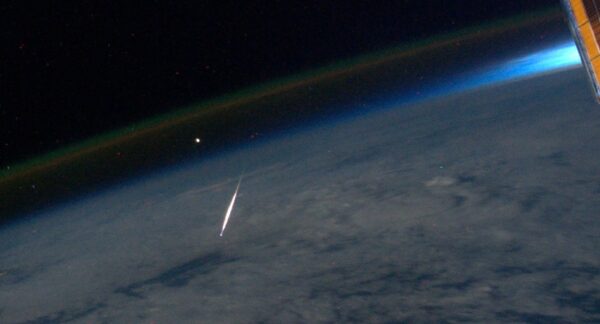
What a “Shooting Star” looks like from space Taken yesterday during Perseid Meteor Shower by @Astro_ron on board the International Space Station
by VirtualAstro | Aug 12, 2011
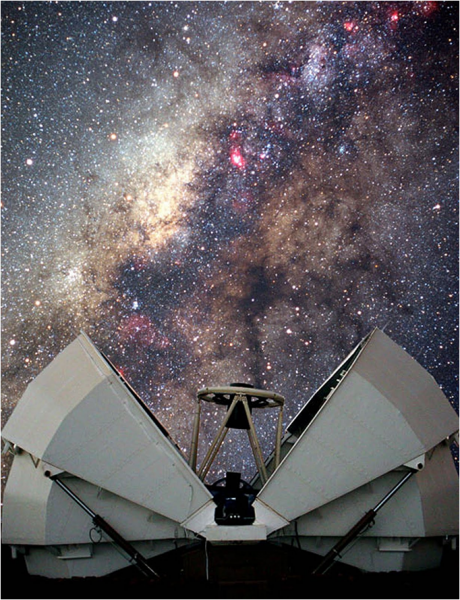
Faulkes Telescope
WINNER @bethlovescake
Win a chance to have Nick Howes (@NickAstronomer on twitter) equipment consultant for Astronomy now image your favorite object using the almost Hubble sized mirror of the amazing Faulkes Telescopes. One in Hawaii one in Asutralia…the choice is yours?
He will even process the image and submit it to the Astronomy Now magazine gallery.
For every Perseid meteor spotted and tweeted over the next two nights for the Meteor Map, each tweet will be entered into the #meteorwatch competition and the winner randomly selected.
So don’t forget to tweet #meteorwatch, 1st part of your postcode, Country code and how many meteors you just saw.
Share your #meteorwatch experience and have fun 🙂
Robotic Telescopes
Faulkes Telescope operates a network of research class robotic telescopes. Currently there are two telescopes, one in Hawaii and the other in Australia each with mirrors nearly the same size as Hubble costing £5,000,000
2011 © Copyright Faulkes Telescope Project, official partner of Las Cumbres Observatory Global Telescope Network