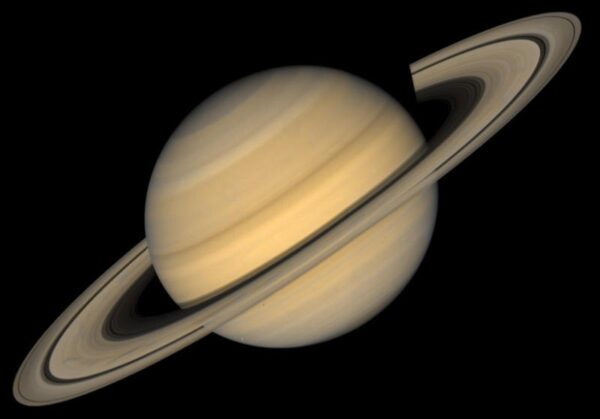
On April 28 2013 the ringed planet Saturn will be at opposition, meaning Saturn is opposite the Sun from Earth. The Sun Earth and Saturn form a straight line or alignment.
What this means is, Saturn will be visible all night in our skies.
Saturn is the second largest planet in the solar system to Jupiter (which can be seen low in the West) and is probably one of the most spectacular or beautiful objects visible to people on Earth. Even those beginning in astronomy or with a passing interest can see Saturn with the naked eye, through binoculars, or see its rings through a small telescope – It’s a breathtaking sight.
The iconic Hubble Space Telescope (HST) was launched 23 years ago on 24 April 1990, and ever since has been returning breathtaking images of the cosmos as well as world-changing science. It is, without a doubt, one of the most successful scientific instruments ever built.
To celebrate its 23rd birthday here is a list of five stunning celestial objects visible over the next couple of months that you can find for yourself using a small earth-based telescope. Most of these objects will look like nothing more than diffuse grey smudges in the field of view of your eyepiece, but I’ve illustrated this post with some Hubble Space Telescope images of the same objects, to show you what they really look like. Despite the fact that your telescope can’t ever show anything as stunning as an HST image, there’s something even more wonderful about seeing these objects in real-time, for yourself, not mediated via a computer screen. (more…)
Partial Lunar Eclipse – December 2009 Credit: @Jochta
On the April 25th 2013 there will be a partial eclipse of the Moon, the first of three lunar eclipses in 2013. It will be seen from The UK and Europe, Africa, Asia, and Australia and will look similar to the above image taken by @Jochta of @ReadingAS. The darkening will be at the top of the Moon not the bottom as seen in the image. (more…)
The ISS is a large Space Station/ laboratory orbiting the Earth, it can be spotted with the naked eye at certain times as it orbits the planet at 17500mph at an altitude of roughly 200 miles.
Spotting the station is very easy and you don’t need any special equipment, only your eyes. (more…)