by VirtualAstro | Nov 21, 2011
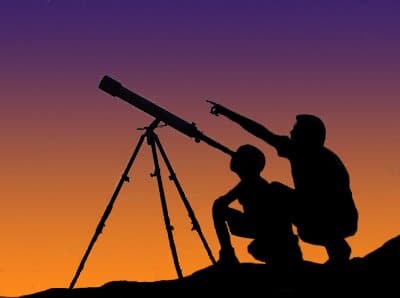
Do you have a new telescope, or are you considering buying a new one? Hopefully, you have chosen a telescope with the best specifications for your budget, but before you can truly get the best out of your wonderful new window on the cosmos, you need to have something even more important than the scope – Eyepieces!
A lot of people new to astronomy, or new to buying astronomy equipment tend to concentrate on telescopes and unfortunately overlook eyepieces, settling for the basic set of 2 or 3 that come with the new telescope.
Eyepieces are probably the most important part of your observing equipment, as they are at the heart of your setup and can make your observing experience fantastic or disastrous, or make an average telescope great or an excellent telescope bad. (more…)

by Steve Owens | Nov 11, 2011
Originally posted on Dark Sky Diary By Steve Owens @Darkskyman on twitter
On the night of 17/18 November 2011 the Leonids meteor shower reaches its peak. This annual performer is associated with Comet Temple-Tuttle, which orbits the Sun once every 33 years leaving a trail of debris as it goes. Once a year the Earth passes through this trail, and we see a meteor shower.
Leonids 2001
This year’s Leonids shower is hampered by the last quarter Moon which sits just to the right of the radiant of the Leonids, in Leo. Despite this there is good reason to observe the shower this year, as the International Meteor Organisation suggest there might be as many as three peaks of activity.
Throughout November the rate of Leonids will increase, with the main peak occurring at 0340 GMT on 18 November, at which time the Zenith Hourly Rate may be 20+. For observers in the UK, observing under cloudless skies, away from light pollution, this translates as an hourly rate of ~14, but the Moon will interfere and reduce this value somewhat. Two other peaks may also occur, at ~2100 on November 17, and at ~2300 on 18 November, with similar rates. This means that both the nights of 17/18 and 18/19 November may offer good opportunites to observe this shower.
The Leonids has the distinction of being the most dramatic meteor shower that I’ve ever seen, as I observed the Leonid meteor storms every year from 1998 to 2002, when we saw hundreds of meteors each night at the peak of the shower. These storm peaks are predictable, and occur every 33 years, associated with the pass of comet Temple Tuttle, as it refreshes the trail of debris that cause the meteors. The next pass of Temple Tuttle is due 2031, so we’ve a long wait for the next storm.
Interestingly, the Leonid storm of 1833 was truly stunning, with rates estimated to be around 100,000 per hour across North America.
To view the Leonids, find a dark spot, away from light pollution, sit on a reclining deck chair facing as large an area of the sky as you can manage, wrap yourself in a blanket, and enjoy the view. For observers in the UK the meteor shower radiant will rise around 2200 GMT on 17 November and will be high in the SE by 0400 on 18 November.
If you want to make observations of the Leonids that might help scientists better understand the shower, you can do so via the Society of Popular Astronomy, or the British Astronomical Association. Lots more info can be found at the Meteorwatch website.