by VirtualAstro | Dec 29, 2011
Stargazing Credit: http://twitter.com/VirtualAstro
As 2011 is drawing to a close, the festive season is here and many of us are winding down and looking forward to the holidays. But this is a great time to look ahead to 2012 and pencil into our calendar and diaries the top astronomical events we don’t want to miss next year.
2012 is going to be a great year for astronomy observing, with some rare and exciting things taking place and a good outlook with some of the regular annual events.
So what top wonders should we expect to see and what will 2012 bring? (more…)
by VirtualAstro | Dec 22, 2011
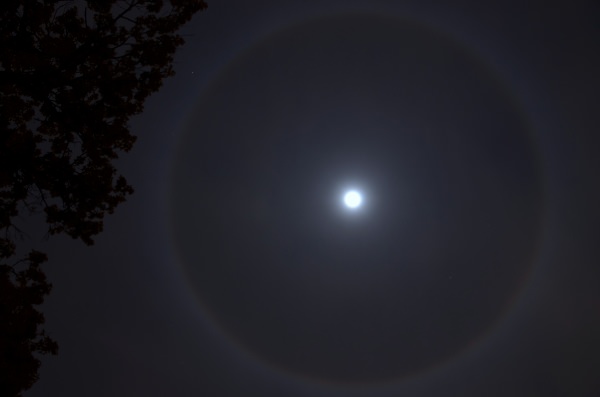
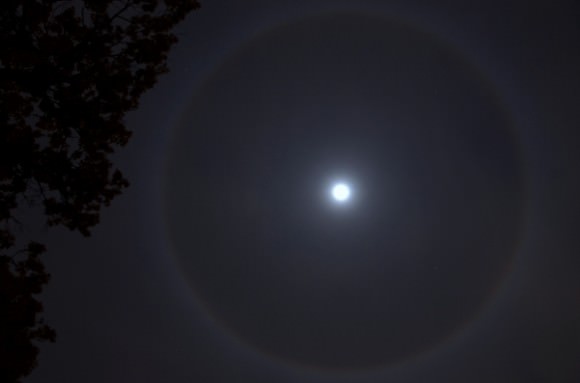
A bright moon halo surrounds the Moon on Dec. 11, 2011. © Jason Major
Have you ever seen a large ghostly disc around the Moon on a cool, calm, hazy night? If so, you have likely seen what is called an “Ice Halo” or “22° Halo.” Not only can the Moon display these ghostly rings of light, but the Sun does so in the day time too.
22° halos are visible all over the world and throughout the year; look for them whenever the sky is wispy or hazy with thin cirrus clouds – even in the hottest countries.
So what are they and why do they appear? (more…)
by VirtualAstro | Dec 12, 2011
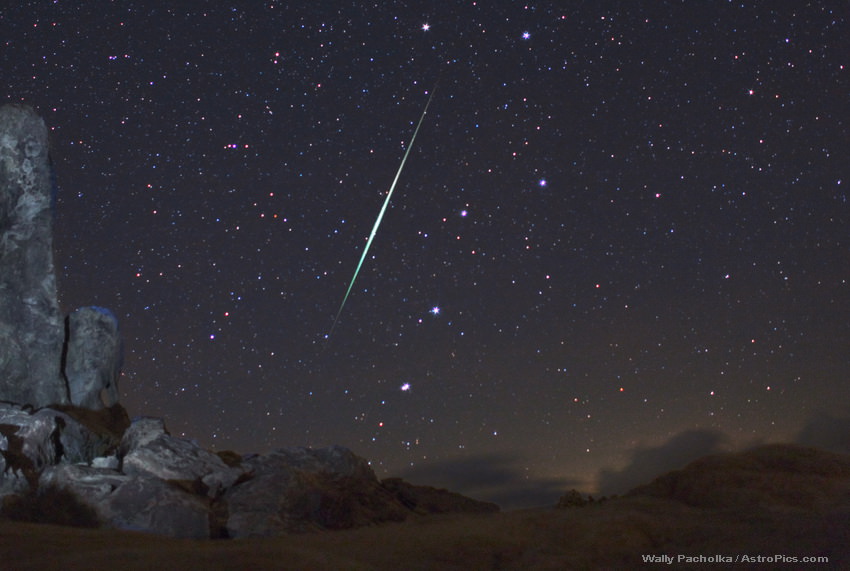
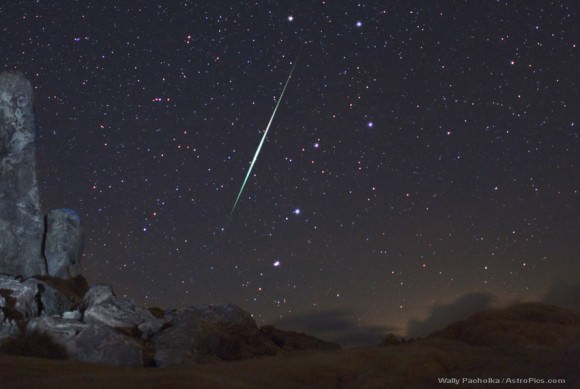
Credit: Wally Pacholka
It’s the finale of this year’s meteor showers: The Geminids will start appearing on Dec. 7 and should reach peak activity around the 13th and 14th. This shower could put on a display of up to 100+ meteors (shooting stars) per hour under good viewing conditions.
However, conditions this year are not ideal with the presence of a waning gibbous Moon (which will be up from mid-evening until morning). But seeing meteors every few minutes is quite possible. Geminid meteors are often slow and bright with persistent coloured trails which can linger for a while after the meteor has burned up.
(more…)

by Steve Owens | Dec 9, 2011
Originally posted on Dark Sky Diary by Steve Owens @Darkskyman on twitter
Astronomy tourism is a burgeoning field – luckily for me, as it’s how I make a living! – with city-folk now starting to make the effort to travel to places with darker skies, in the hope of seeing things that simply cannot be seen from the orange glare of a town sky.
Stargazers at an astronomy tourism event in Sark (image credit: Martin Taylor)
Galloway Forest Dark Sky Park, which I helped establish in 2009, has seen a lot of this dark sky tourism trade, due to its high profile in the media, but many other places around the country – Sark in the Channel Islands, and Exmoor National Park to name but two – have followed suit, hoping to attract the stargazing crowds.
And as more and more people come out of the city for a stargazing weekend under dark skies it’s becoming clear to me that there’s a real appetite for seeing the Milky Way and other elusive dark sky objects. It’s almost become something to put on your “bucket list”: see a wild lion in Africa; fly in a hot air balloon; see the Milky Way.
However there are lots of other amazing astronomical objects visible under a dark sky so here is the first installment of my top-ten “Dark Sky Bucket List”. (more…)

by Astroguyz David Dickinsen | Dec 7, 2011
2011 has been quite a year, both terrestrial and otherwise. This week sees the last of the big scheduled astronomical happenings of the year in the form of the Geminid meteor shower.
This shower is one of the yearly standbys along with the Perseids that are always sure to produce. The Geminids have a long peak centered on the morning of December 14th when an idealized Zenithal Hourly Rate (ZHR) of up to 120 meteors per hour may be seen.
Problems will arise, however, from an 82% illuminated waning gibbous Moon in the adjacent constellation of Cancer. Rising roughly around 10PM local on the night of the peak, this makes for the worst possible Moon phase as it’ll be high and bright in the early AM hours, just as the meteor shower is getting into high gear. But as always, I wouldn’t let that stop you from looking! (more…)