by VirtualAstro | Dec 17, 2014
Christmas Eve ISS Passes USA and Canada 2014
It’s Christmas Eve. presents are under the tree and it’s time to make merry with a little festive fun!
The international Space Station (ISS) will be passing over North America, it will appear as a bright star like object moving across the early evening sky. (more…)

by VirtualAstro | Dec 10, 2014
ISS UK Pass details for December 2014

by VirtualAstro | Dec 6, 2014
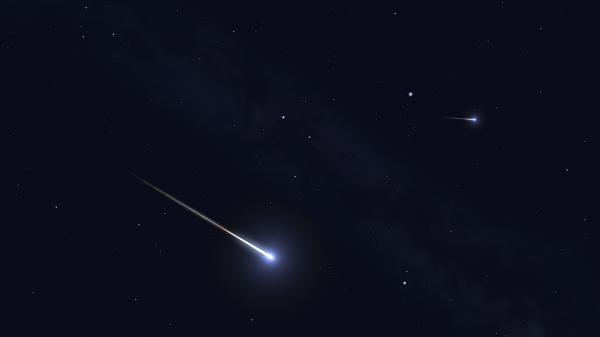
Shooting stars: a beautiful sight everyone should see at least once!
Have you ever seen a shooting star? It’s quite a spectacle, seeing a little piece of dust or rock burning a line across the night sky. If you’d like to see shooting stars (or perhaps even a much more impressive fireball!) without waiting for hours and hours, what you need is a meteor shower.

While you’re at it, why not take an amazing photo? With NightCap Pro you can photograph a meteor shower using your iPhone!
What is a meteor shower?
Meteor showers happen when a comet (or sometimes an asteroid) crosses the earth’s orbit around the sun. They leave behind a trail of dust and small bits of ice and rock, and each time the earth passes through this trail lots of these bits burn up in our atmosphere. Each time it happens, we see a shooting star.
When to see a meteor shower
There are many meteor showers throughout the year. There’s an excellent guide to viewing meteor showers including a good timetable at Meteorwatch.
What to expect
(more…)

by VirtualAstro | Dec 1, 2014
by VirtualAstro | Dec 1, 2014
December Night Sky
Tonight’s Sky: December 2014
Your guide to constellations, deep-sky objects, planets and events, Tonight’s Sky, Highlights of the December Sky (more…)
by VirtualAstro | Nov 23, 2014
Soyuz Launch to The International Space Station – WATCH LIVE
Broadcast live streaming video on Ustream
by VirtualAstro | Nov 3, 2014
NASA #Orion Test Flight – Live launch December 5th 2014
Broadcast live streaming video on Ustream

by VirtualAstro | Sep 24, 2014
UK ISS Pass details for October 2014
The International Space Station (ISS) is back over UK skies with some great evening passes during October 2014. Watch out for this bright delight in the autumn skies.
The ISS is the largest Space Station/ laboratory ever built, it can be spotted with the naked eye at certain times as it orbits Earth at 17500mph at an altitude of roughly 200 miles.
Spotting the station is very easy and you don’t need any special equipment. You only need your eyes!
Check out the Beginners Guide to Seeing the ISS to learn how easy it is to spot sailing over and the Beginners Guide to Photographing the International Space Station (ISS). (more…)