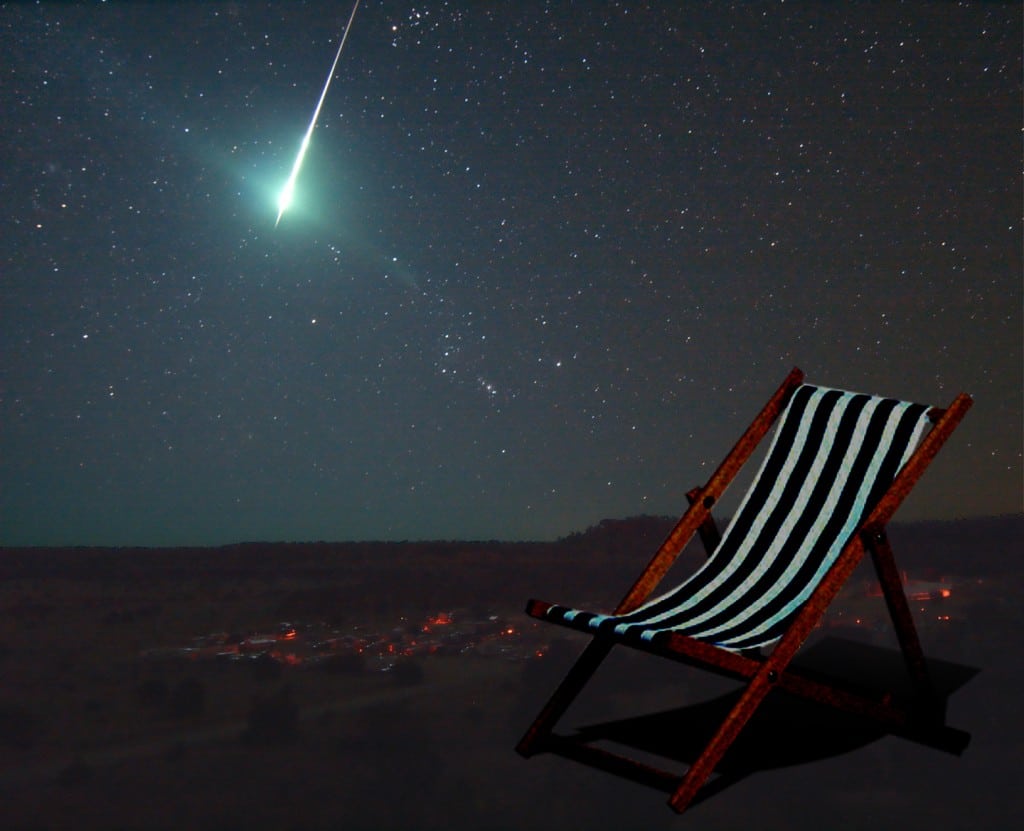
The Taurid meteor shower is one of the annual meteor showers. It’s not a shower with lots of meteors like the Geminids in December or Perseids in summer, but the few meteors it produces are incredibly bright fireballs! Well worth looking out for. (more…)
One of the good things about meteors is that you don’t need any equipment-just your eyes and a bit of patience. Even in a so-called ’meteor shower’, it is rare to get more than one meteor a minute; don’t be surprised if you see nothing for five or ten minutes, then two meteors in a row. (more…)
The Perseid Meteor Shower Image Credit :- Astronomy Picture of the Day
The Perseids are one of the most prolific and best-known of the meteor showers and the Perseid Meteor Shower can be seen in late July and through August each year, with the maximum Perseid meteor activity on or around 11/12/13 August. 2016 could see an outburst of meteors of approximately 200 per hour!(more…)
The International Space Station (ISS) is back over UK skies with some great evening passes during August 2015. As an added bonus watch out for Perseid Meteors leading up to their peak on the 13th. Check the guide on how to observe meteors.
The ISS is the largest Space Station/ laboratory ever built, it can be spotted with the naked eye at certain times as it orbits Earth at 17500mph at an altitude of roughly 200 miles.
Spotting the station is very easy and you don’t need any special equipment. You only need your eyes!
The International Space Station (ISS) is back over UK skies with some great evening passes during June 2015. Watch out for this bright delight in the autumn skies.
The ISS is the largest Space Station/ laboratory ever built, it can be spotted with the naked eye at certain times as it orbits Earth at 17500mph at an altitude of roughly 200 miles.
Spotting the station is very easy and you don’t need any special equipment. You only need your eyes!