by VirtualAstro | Dec 29, 2011
Stargazing Credit: http://twitter.com/VirtualAstro
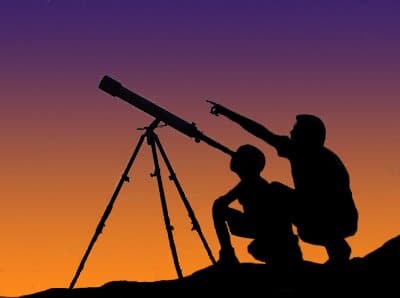
As 2011 is drawing to a close, the festive season is here and many of us are winding down and looking forward to the holidays. But this is a great time to look ahead to 2012 and pencil into our calendar and diaries the top astronomical events we don’t want to miss next year.
2012 is going to be a great year for astronomy observing, with some rare and exciting things taking place and a good outlook with some of the regular annual events.
So what top wonders should we expect to see and what will 2012 bring? (more…)
by VirtualAstro | Dec 22, 2011
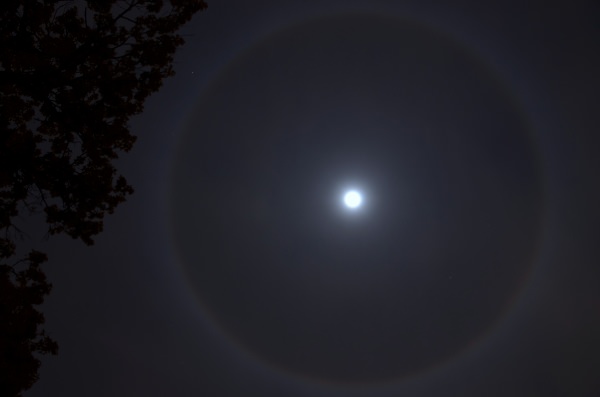
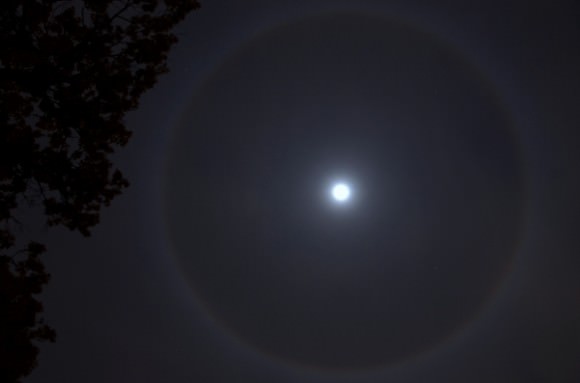
A bright moon halo surrounds the Moon on Dec. 11, 2011. © Jason Major
Have you ever seen a large ghostly disc around the Moon on a cool, calm, hazy night? If so, you have likely seen what is called an “Ice Halo” or “22° Halo.” Not only can the Moon display these ghostly rings of light, but the Sun does so in the day time too.
22° halos are visible all over the world and throughout the year; look for them whenever the sky is wispy or hazy with thin cirrus clouds – even in the hottest countries.
So what are they and why do they appear? (more…)
by VirtualAstro | Dec 12, 2011
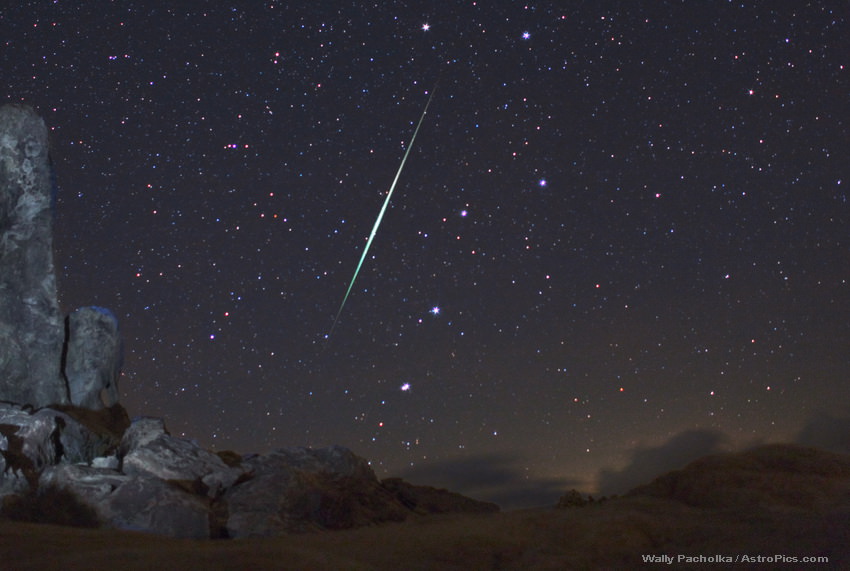
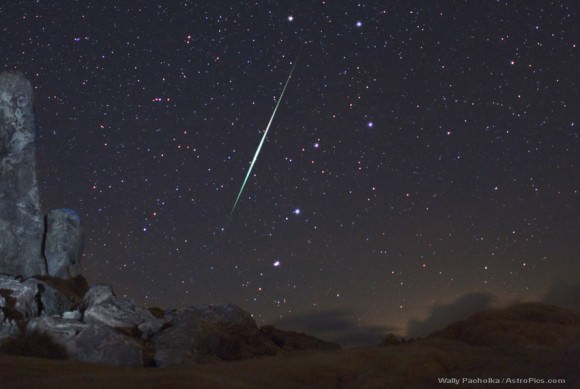
Credit: Wally Pacholka
It’s the finale of this year’s meteor showers: The Geminids will start appearing on Dec. 7 and should reach peak activity around the 13th and 14th. This shower could put on a display of up to 100+ meteors (shooting stars) per hour under good viewing conditions.
However, conditions this year are not ideal with the presence of a waning gibbous Moon (which will be up from mid-evening until morning). But seeing meteors every few minutes is quite possible. Geminid meteors are often slow and bright with persistent coloured trails which can linger for a while after the meteor has burned up.
(more…)

by VirtualAstro | Dec 5, 2011
Originally posted by and full credit to NASA view the original article here
This artist's conception illustrates Kepler-22b, a planet known to comfortably circle in the habitable zone of a sun-like star. Image credit: NASA/Ames/JPL-Caltech
NASA’s Kepler mission has confirmed its first planet in the “habitable zone,” the region where liquid water could exist on a planet’s surface. Kepler also has discovered more than 1,000 new planet candidates, nearly doubling its previously known count. Ten of these candidates are near-Earth-size and orbit in the habitable zone of their host star. Candidates require follow-up observations to verify they are actual planets.
The newly confirmed planet, Kepler-22b, is the smallest yet found to orbit in the middle of the habitable zone of a star similar to our sun. The planet is about 2.4 times the radius of Earth. Scientists don’t yet know if Kepler-22b has a predominantly rocky, gaseous or liquid composition, but its discovery is a step closer to finding Earth-like planets. (more…)

by VirtualAstro | Nov 21, 2011
Do you have a new telescope, or are you considering buying a new one? Hopefully, you have chosen a telescope with the best specifications for your budget, but before you can truly get the best out of your wonderful new window on the cosmos, you need to have something even more important than the scope – Eyepieces!
A lot of people new to astronomy, or new to buying astronomy equipment tend to concentrate on telescopes and unfortunately overlook eyepieces, settling for the basic set of 2 or 3 that come with the new telescope.
Eyepieces are probably the most important part of your observing equipment, as they are at the heart of your setup and can make your observing experience fantastic or disastrous, or make an average telescope great or an excellent telescope bad. (more…)