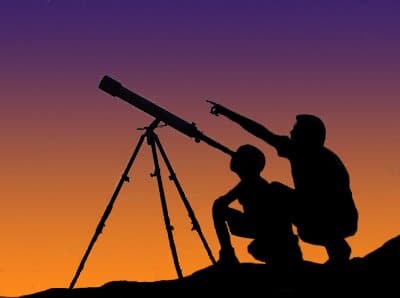
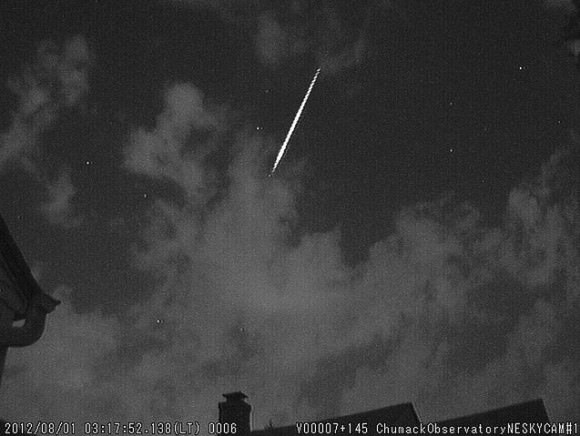
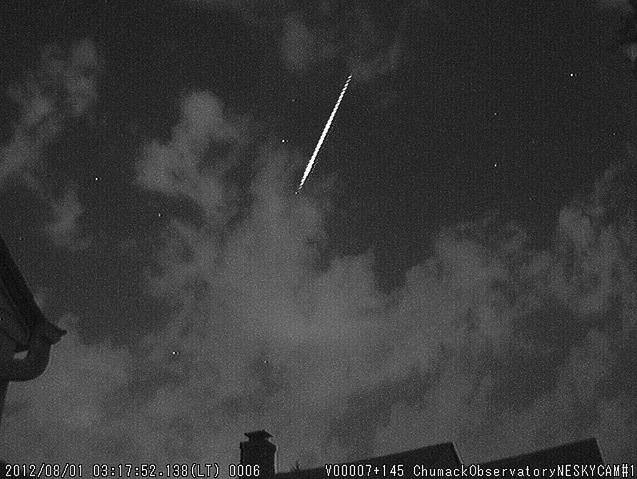
This will probably be the most simple and easiest guide to viewing the Perseids and other meteor showers you may possibly ever read. The reason why it is so simple is when you are outside you want to concentrate on looking for meteors and not worrying about technical details, which are unnecessary for the casual observer.
It’s meteorwatch and as well as shooting stars from the Perseid meteor shower, we can see some excellent International Space Station (ISS) passes alongside the celestial fireworks. (more…)
The Perseids are one of the most prolific and best-known of the meteor showers and can be seen in late July and through August each year, with the maximum activity on or around 12/13 August. One advantage of the Perseids shower is that it happens in the warmer weather of Summer, which makes it ideal for anyone interested in seeing their first meteor. You can see a meteor at any time of year but, for a day or so around the date of maximum, there may be a ten times better chance of seeing one. (more…)
It’s Noctilucent Cloud season here in the northern hemisphere. These rare clouds – the name means “night-shining” – only appear in the sky at specific times of night and times of year, and the next three months (mid-May till mid-August) are the best time for northern stargazers to spot them (southern stargazers get a chance between mid-November and mid-February).
These high thin clouds are seen in deep twilight, and as the name suggests they look lit up, as indeed they are. When the Sun is between 6 and 16° below the horizon, that is during nautical twilight and much of astronomical twilight, its light can still shine on these high clouds, floating 80km up in the atmosphere. Check out your twilight times and head outside on a clear night to try and spot them.
In addition to these restrictions in time only stargazers between 50° and 65°N can see them. That’s most all of the UK, so we’re ideally placed for hunting NLCs.
No one’s quite sure why they form, and indeed they weren’t seen (or at least weren’t reported) before 1885, and so there is some suggestion that they’re linked with man-made climate change. Whatever the case they are beautiful clouds to see, so take the chance over the next few months.