by Steve Owens | Mar 10, 2011
Originally posted on Dark Sky Diary by Steve Owens @darkskyman
There seems to be a growing excitement about the “Supermoon” that is due to occur on 19 March 2011, when the Moon will be at its closest to Earth in this orbit, and closer than it has been at any time since 1992.

Moon – not Super
The Moon orbits the Earth in an elliptical orbit, i.e. it is not perfectly circular, and so in each orbit there is a closest approach, called “perigee” and a furthest approach, called “apogee”.
At this month’s perigee the Moon will be 356,577km away from Earth, and will indeed be at its closest in almost 20 years. But how close is it compared with other perigees?
Let’s start by comparing it to the Moon’s average distance from the Earth, which is ~385,000km. This perigee will be ~8% closer to the Earth than average. OK, that’s a bit closer, but not significantly so.
What about comparing it to the Moon’s average perigee distance, which is ~364,000km. So this “Supermoon” will be ~2% closer to the Earth than it is most months at perigee. Wow!
So what will this mean to you? Nothing at all. The Moon will be a few percent bigger in the sky, but your eye won’t really be able to tell the difference. It will also be a few percent brighter, but your eye will compensate for this too, so altogether this “Supermoon” will look exactly the same as it always does when it’s full.
As to all of those soothsayers claiming that there will be earthquakes and tidal waves. There very well might be, but they’ll be nothing at all to do with the Moon.
UPDATE: I predict that lots of people will report having seen a huge Moon on or around 19 March
by VirtualAstro | Mar 8, 2011
Originally Posted on Universe Today by meteorwatch (@VirtualAstro)
I am often asked by people “I’m a beginner, so what telescope should I buy?” Or more often, what GoTo telescope would I recommend for someone starting out in astronomy?
When venturing out and buying your first telescope, there are a number of factors to consider, but because of glossy advertising and our current digital age, the first telescope that people think of is a GoTo.
Do you really need a GoTo or would a manual telescope suffice? In order to make a good decision on what telescope to buy, you need to decide on what you want to use the telescope for — observing, photography, or both and does it need to be portable or not? This will help you make the best decision for the mount of your telescope.
GoTo telescopes are usually advertised as being fully automatic and once they have set themselves up, or are set up by the user, they can access and track and many thousands of stars or objects with just a simple touch of a button. These features have made GoTo scopes are very desirable with many astrophotographers.
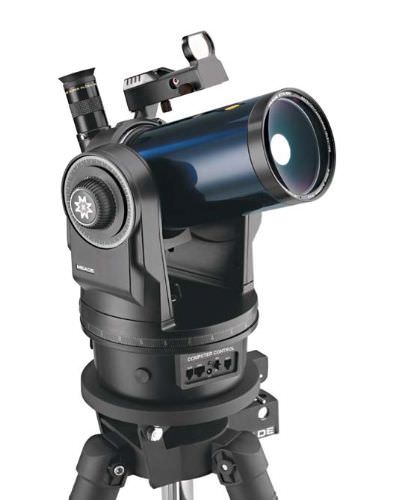
Manual telescopes are not automatic or driven by motors as GoTo scopes are. They are predominantly used for observing (using your eyes instead of a camera) and the scope is moved by hand or by levers by the user to find different objects in the eyepiece. Manual telescopes usually have a finder scope, red dot finder or laser finder to aid in finding objects in the eyepiece. They are unable to track objects, which can make them unsuitable for photography.
GoTo Vs Manual
Compared to GoTo telescopes, manual telescopes are much more economical as you are basically buying a very simple mount and an optical tube assembly (the telescope tube, or OTA). With GoTo you are adding electronics and control mechanisms to drive the scope, which can add heavily to the cost. A small GoTo telescope could cost the same as a lot larger manual Dobsonian telescope.
Good GoTo telescopes make astrophotography very accessible and enjoyable, especially with the addition of cameras and other kits. As opposed to manual scopes, GoTos can be used for long exposure astrophotography. Be aware though, that much astrophotography is done with very expensive imaging equipment, but good results can be achieved with web cams and DSLR cameras.
Manual telescopes are brilliant at helping you discover and learn the sky as you have to actually hunt or star hop for different objects. I once met a person who had been using a GoTo telescope heavily for a year, and at a star party I asked her to show some kids where a well known star was with my laser pointer, she didn’t know because she was used to her GoTo scope taking her to objects.
So which one should you buy?
I would recommend for pure visual observing a manual telescope such as a large Dobsonian or Newtonian telescope. The human eye needs as much light to enter it as possible to see things in the dark, so a big aperture or mirror means greater light gathering and more light entering your eye, so you can see more. What you saved by not having GoTo, you can spend on increasing the size of your telescope.
If you want to add photography or imaging capabilities then I would definitely recommend a good quality GoTo scope or mount. You will get a smaller aperture compared to the manual scope for the same money, but the scope will track for astro-imaging and can also be used for visual observing. Be prepared to spend a lot more money, though.
Consider how you want to use your telescope and the size of your budget. Avoid buying low end, cheap, budget, or what is known as “department store” telescopes to avoid disappointment. Save up a little longer and get a good telescope. Visit your local astronomy store or telescope distributor and before you buy ask an astronomer, they will be glad to help.
I hope you enjoy your new telescope for many years to come 
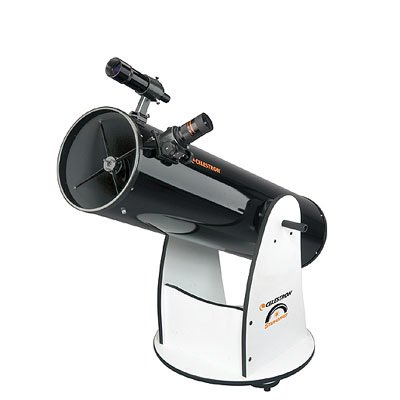
Dobsonian Telescope
by VirtualAstro | Mar 8, 2011
Originally Posted on Universe Today by meteorwatch (@VirtualAstro)
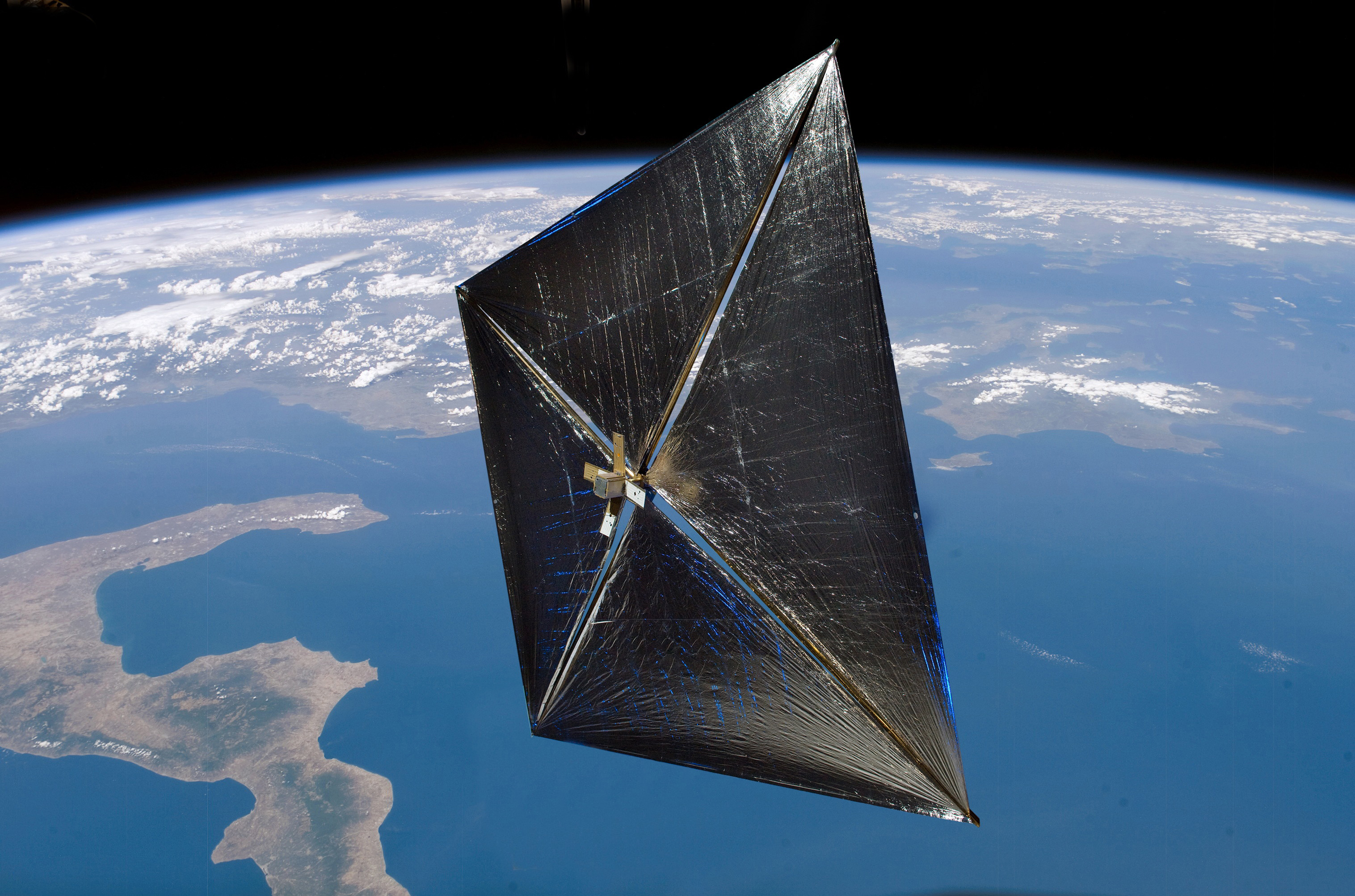
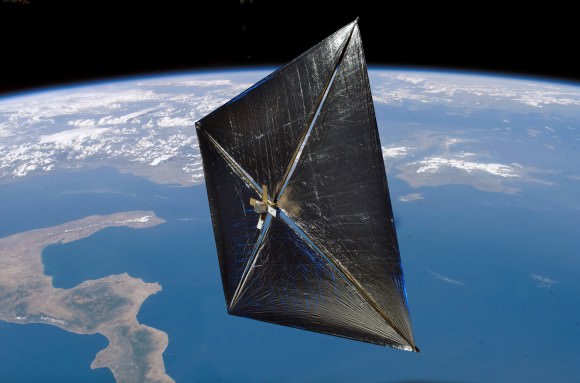
Artist concept of Nanosail-D in Earth orbit. Credit: NASA
The night sky has many wonderful objects to look at on a clear evening, including many man-made satellites, and the always impressive International Space Station (ISS). Now there’s a new addition to these artificial delights: the first ever solar sail to orbit the Earth, NASA’s Nanaosail-D Satellite. Want to know how you can see it?
The 10m x 10m reflective sail is designed to act like a brake and gradually create drag in the upper atmosphere, slowly pulling a satellite down and de-orbiting it at the end of its working life. Nanosail-D is testing the potential of this technology to reduce space junk and debris.
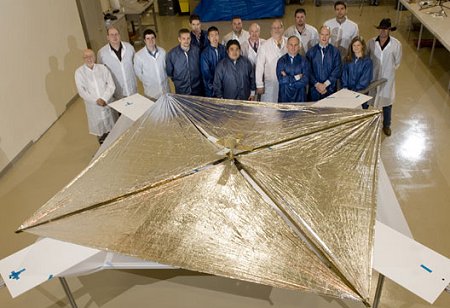
NanoSail D. Image credit NASA
The satellite has a huge reflective sail and could potentially be many times brighter than the planet Venus when it catches a glint from the Sun. Unlike the International Space Station (ISS) and other satellites, the sail will not be visible when it is directly above us as we will be looking at it edge on, It will be more visible when closer to the horizon.
The Nanosail-D satellite will be visible from now and for the next few months. To see it you will need to know exactly when it will be visible from your location. To do this, go to heavens-above.com or spaceweather.com where star charts with times and pass details will be displayed after you enter your observing site.
Once you know the time and location in the sky of the pass of the satellite, make sure you are able to get a good view of the horizon, or part of the sky where the satellite due to appear. Give yourself plenty of time, go outside and get ready. I always set a 30 second reminder on my watch or cell phone, so I don’t have to fumble around or guess the time.
Unlike the ISS and most other satellites, Nanosail-D passes may only last a few, or a few tens of seconds, so make sure you are looking in the right place at the right time. You will see an amazingly bright star-like object rise up, get brighter and then suddenly disappear. When it “disappears” it is still passing over, it’s just no longer at the right angle or is no longer being illuminated by the sun. NanoSail-D has few reflective surfaces compared to many on the ISS.
To enjoy the Nanosail-D passes:
• Make sure you know the right place in the sky and the time of the pass, by checking on the web.
• Make sure you will be able to get a clear view of it from your viewing location.
• Set an alarm or get ready for the pass as it only lasts a few seconds.
• NASA expects NanoSail-D to stay in orbit until April or May 2011.
• If you are an astrophotographer, don’t forget, NASA and SpaceWeather.com are having an imaging contest of NanoSail-D. Find out more here.
• Most of all, get your friends and family outside with you to watch Nanosail-D and enjoy!
by VirtualAstro | Feb 24, 2011
Originally posted on Dark Sky Diary by Steve Owens (@darkskydman)
The BBC news website today has a feature on Double Summertime (DST), the proposal to set all UK clocks forward by one hour throughout the year, so that we might all benefit from longer evenings. The argument is that this will boost tourism, reduce road traffic accidents, and give us more time to enjoy outdoor activities in the evening.
UK amateur astronomers would lose 25% of their dark evening observing hours under Double Summertime
The main argument normally put up against Double Summertime is that there will be an increase in road traffic accidents due to darker mornings. This is technically true, although it is more than offset by the reduction in RTAs as a result of the brighter evenings, and therefore overall it’s safer, saving an estimated 80-100 lives per year. (See section 4.6, pp. 49-50 in the report Road Safety Beyond 2010 for the estimates in detail).
The extra hour of daylight each evening could be worth £3.5 billion through increased tourism, as well as creating around 8000 new jobs.
And finally, the reduced use of lights at night might save an estimated 2% of our daily electricity use, or 1.2 million tonnes of carbon.
So what’s not to like?
Well, not everyone would welcome brighter evenings. It is definitely a minority interest when set against the pro-safety, pro-business, pro-environment arguments above, but the UK amateur astronomy community would be more than a little put out by the change, losing an hour of stargazing each night. Of course, that hour won’t be lost, they’ll simply have to stay up later to observe, but the fact is many won’t. Staying up until midnight on a weeknight when you have got work the next day is very different from staying up till 1am. In addition public star parties will have to start later, therefore attracting fewer people throughout the year. Small concerns maybe, but it’s worth recognising that not everyone in the country would welcome brighter evenings.
| City |
Annual # of hours of darkness*
before midnight under present system |
Annual # of hours of darkness*
before midnight under DST |
% decrease |
| Glasgow |
977 |
731 |
25% |
| London |
1110 |
830 |
25% |
* darkness = after the end of astronomical twilight
As you can see from the table above, amateur astronomers around the country would lose 25% of their dark evening observing hours throughout the year. Of course these “missing” hours could be made up by staying up an hour later, but that’s not always practical.
Just at the point where astronomy is starting to dramatically increase in popularity, with a surge in telescope sales due to projects like the International Year of Astronomy 2009 and BBC Stargazing Live, a switch to DST would put a serious dent in that enthusiasm. The table below is similar to the one above except that it shows the number of hours of darkness before 10pm, the time that an enthusiastic newcomer might stay up doing simple observing, or the latest that a public star party might run. As you can see the % decrease is even more dramatic here, with reductions of more than 1/3.
| City |
Annual # of hours of darkness*
before 10pm under present system |
Annual # of hours of darkness*
before 10pm under DST |
% decrease |
| Glasgow |
515 |
328 |
36% |
| London |
584 |
379 |
35% |
I’m not necessarily arguing against DST, given how many lives it could save, how much money it would bring in through tourism (although the change could seriously hamper an area that is developing its astronomy tourism), and how much it would benefit the

by Steve Owens | Feb 19, 2011
Originally posted on Dark Sky Diary by Steve Owens @darkskyman
Over two weeks between 21 February and 06 March 2011 you can take part in the international project GLOBE at Night, an annual 2-week campaign. During GLOBE at Night, you can record the brightness of your night sky by matching its appearance against the constellation Orion with star maps of progressively fainter stars. Your measurements are submitted on-line and a few weeks later, organizers will release a map of light-pollution levels worldwide. Over the last five GLOBE at Night campaigns, volunteers from over 100 countries have contributed 35,000 measurements.
So what exactly do you need to do? It’s simple, just visit the GLOBE at Night website and follow their instructions. You’ll need to:
1. print out the Orion maps from the activity pack
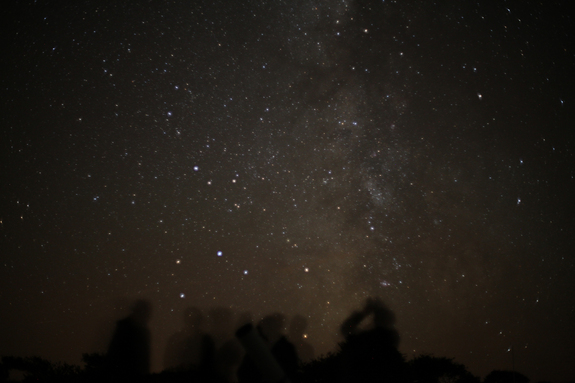
2. go outside and find Orion. Make sure you wait till it’s properly dark, which is after about 2015 your time. Hint, Orion will be towards the south, and looks like this:

- The constellation of Orion
3. compare what you see with the seven Orion maps, and note down which one it looks like the most. This will tell you the magnitude (brightness) of the dimmest stars you can see
4. report your observation using the GLOBE at Night web app or through their website including the date and time you made the observation, and your latitude and longitude (don’t worry, there’s an interactive map that’ll help you find these).